
Canada Reduces Temporary Residents 2026: Impact on Students, Workers & PR
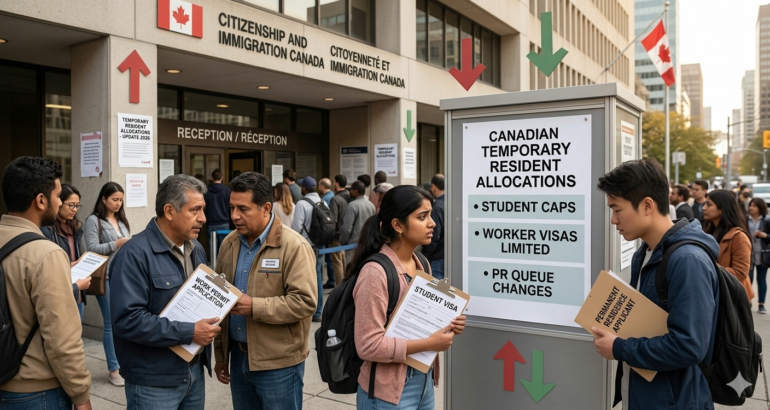
Canada has long been one of the top destinations for international students, foreign workers, and immigrants. However, in 2026, the Canadian government introduced major changes aimed at reducing the number of temporary residents, including international students and work permit holders.
These changes are already reshaping immigration pathways and creating both challenges and opportunities for applicants worldwide.
Why Is Canada Reducing Temporary Residents?
The Canadian government has announced a strategic shift to control population growth and ease pressure on housing, healthcare, and public services.
- Canada plans to reduce temporary residents to 5% of its total population by 2027
- Previously, temporary residents made up over 6–7% of the population, reaching nearly 2.5–3 million people
This policy shift reflects concerns that immigration levels had become unsustainable in recent years, especially in major cities.
Major Changes in 2026 Immigration Policy
1. Sharp Reduction in International Students
One of the biggest impacts is on student visas:
- Canada has cut international student intake nearly in half
- From around 305,000 expected students to approximately 155,000 in 2026
This means:
- Fewer study permits
- Increased competition
- Stricter eligibility criteria
2. Tighter Rules for Work Permits
Canada is also tightening its temporary foreign worker programs:
- Stricter eligibility requirements
- More employer compliance checks
- Reduced reliance on low-skilled foreign workers
This directly affects:
- Open work permit applicants
- LMIA-based job seekers
- Post-Graduation Work Permit (PGWP) pathways
3. Overall Decline in Temporary Residents
For the first time in years:
- Canada recorded a drop in temporary residents between 2024–2025
- Major cities like Toronto and Vancouver saw the biggest declines
This marks a major policy reversal after years of rapid growth.
Impact on International Students
Harder to Get Admission
With fewer study permits:
- Universities are becoming more selective
- Visa refusal rates may increase
Limited Work Opportunities
Changes to PGWP and work permits may:
- Reduce post-study job flexibility
- Affect long-term settlement plans
Increased Scrutiny
Authorities are cracking down on:
- Fraudulent admissions
- “Dummy” visa extensions
Impact on Foreign Workers
Reduced Job Opportunities
Fewer temporary workers means:
- Employers may hire locally first
- Fewer LMIA approvals
Stricter Compliance
Employers and applicants face:
- More documentation requirements
- Higher scrutiny from immigration authorities
Impact on PR (Permanent Residency) Applicants
While temporary pathways are tightening, there is a positive angle for PR applicants:
More Focus on Permanent Immigration
Canada is:
- Maintaining approximately 380,000 PR admissions annually
- Prioritizing long-term immigrants over temporary residents
Better Opportunities for Skilled Candidates
Programs like:
- Express Entry
- Provincial Nominee Program (PNP)
may become more favorable for high-skilled applicants.
What This Means for Pakistani Applicants
For applicants from Pakistan, these changes mean:
Plan More Strategically
- Choose programs aligned with labor shortages
- Avoid low-quality colleges
Focus on Strong Profiles
- Higher IELTS scores
- Skilled work experience
- Recognized qualifications
Consider Alternative Pathways
- PR-focused routes (Express Entry, PNP)
- Entrepreneur and investment immigration
Expert Insight
Canada is not closing its doors—it is becoming more selective.
The new policy is designed to:
- Reduce pressure on housing and infrastructure
- Improve immigrant integration
- Prioritize quality over quantity
Final Thoughts
The reduction in temporary residents marks a major shift in Canada’s immigration strategy. While it creates challenges for students and workers, it also opens doors for serious, skilled, and well-prepared applicants.
If you are planning to move to Canada in 2026 or beyond, the key is simple:
Adapt your strategy to the new immigration reality.
Need Help With Canada Immigration?
Sun Investment & Consulting Pvt. Ltd can help you with:
- Canada Study Visa
- Express Entry and PR pathways
- Business and Investment Immigration
Contact us today for a consultation.

Afzal Ghazi


Leave a Comment